T(t)ime, the Ultimate Mysterium: A Journey in Ethnography
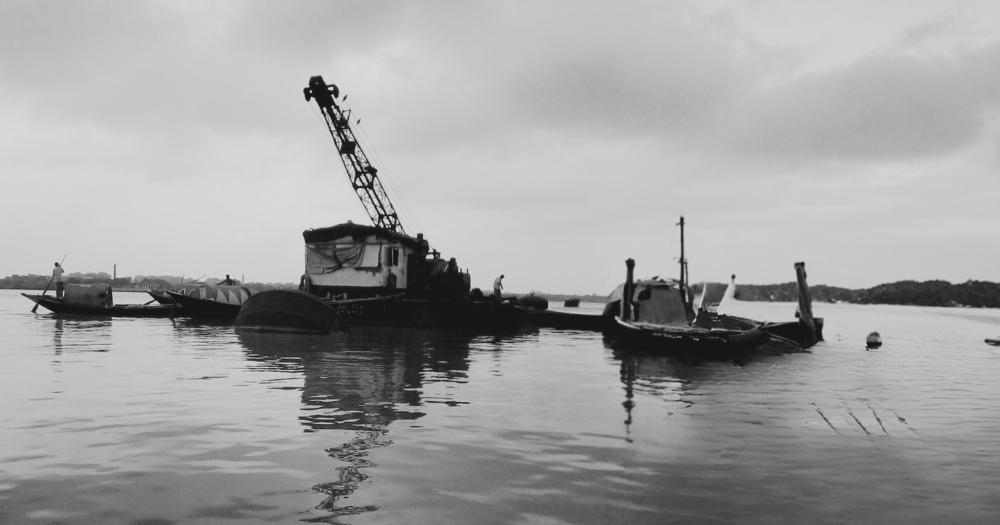
It took me a while to understand that T(t)ime has been a recurrent theme in my research. Perhaps, it is more than a theme—somewhat of an organising principle of my ethnographic and philosophical inquiries. In my first book, Time, Space, and Capital in India [1], I give the description of an eighteen-year-old girl who told me that she liked to walk round and round the boundaries of a village; this gave her an illusion of largeness, expanse, and perhaps, freedom within the gendered confines of a West Bengal village. This was the first instance where I felt that I might be inferring something about time in my ethnography of derelict industrial-urban spaces in the district of Howrah, on the edges of the colonial capital of Calcutta. Seemingly, she was measuring the confines of her village (read Space) with her walking body. To me, she was inhabiting a different rhythm of time than she was otherwise permitted by the temporal protocols of gendered village life. Being eighteen years of age, she desired a cell phone, a boyfriend, and a Facebook account. These were signposts of another’s time. These were rhythms of a life that she was denied, and she continued to inhabit it in her imagination—she wanted to occupy other people’s time. Also, she felt that she was outside of the time that mattered. Her own rhythmanalytic strategy was something autonomous and unique. She measured the time that she was allocated by destiny, with her feet, in a radically different tempo, so as to change time as she experienced it. The lesson I learnt was really quite simple: time is narrative. It is only afterwards that I read Paul Ricœur [2].
In a most intriguing article published in Cultural Anthropology in 2016, Eli Thorkelson too writes about walking round and round [3]. But this time, in a protest staged by academics in Sarkozy’s France. They were walking round and round in stubbornness, disavowal, refusal. I invoked Thorkelson to understand the eighteen-year-old’s stubbornness of refusing to be coded in the time that one is allocated by one’s immediate destiny. I wrote:
In a tragic tone, I might add, we have inherited heavily from theories of democratic rule, a politics that is centered around articulation of interest. Hence, the death of Chandra, as told by Ranajit Guha (1983), or the death of Bhuvaneshwari, as told by Gayatri Spivak (1988), seem bewildering and pointless. These bodies articulate excess and ambiguity. They refuse subjectivation (Ortner 1995), as it were, as the only politics that could do them any justice.
Is this ‘madness’? I ask. The answer, my intuition is, lies in the heart of our horizon of imagination of the shape and texture of just rule – resistance must necessarily be an articulation [of] a form of correction of present or past wrong, a crafting of a better future. These are not calls for revolution. They are calls and attempts at engineering small, contextual justices from the sovereign [4].
These round and round protest walks or versions thereof are not calls for revolution. But they are in a way marking a footnote that observes the shadowy possibility of revolutionary time. They are pressing forth on the life of grim reality and a sliver here and there of possibility. Time that breaks with the flow of History. It was 2011 then, as I completed doctoral fieldwork in Bengal, and I had already read Dipesh Chakrabarty’s History 1 and 2 analyses in Provincializing Europe [5], so I knew that not everyone needed to belong to the same, dominant Eurocentric historical consciousness. But I was not fully satisfied.
T(t)ime had become a real thing for me, distinct from the additive logics of History. Marx’s notion of temporal discipline and the working day (Capital: Volume One) were convincing, but left me wanting. Time is experience, and its capacity to render itself in language and narrative is not always History.
Time is a machine of ruination—a la Walter Benjamin [6], who I understood better with the help of Susan Buck-Morss [7]—not only in his famous formulation of ‘homogenous, empty time’ [8] but also in his thinking around ruins as a peculiarly modern form. While encountering walking subjects or walking through industrial ruins in Bengal, I found Benjamin to come alive. Space is coagulated time. The long-dead, German, Jewish Benjamin whispered in my ears across the bridges of time and historical location. Time spatialises as built environment. The world appeared to me as remainder of an event, a moment—millions of those—each one unique and incomparable to another, and all embedded as trace in the spatial form. One doesn’t only have to go to the ruins of architecture to understand this. But notice, a bus stop. It remains in the shadow of the lost opportunity of a bus that has passed one by. It is a past of lost futurity.
In a short walking essay, titled ‘Ruin’ in the Sarai Reader, for the first time I wrote publicly, though implicitly, about time:
Oil seed turned into oil, ore to usable metal, flax to jute, nuts and bolts for machinery to be strung together, manhole-covers. A wave of time swept on this shore once, a nation-state was born. With it a struggling regional state. And some of its political luminosity was lent to this landscape. Furnaces burnt – layered in soot – for they had known only to burn ever. Ideology and opportunity washed against the river-bed time and time again to give birth to an angry land. A landmass that was once intoxicated by the wideness lent by proximity to a passing stranger, struggles today, constructing repeatedly the sensation of wideness and associated glory of the stranger’s canvas, on its tattered historical notepad [9].
Space lived in the shadow of a past moment, contemplating futures past [10]. Intimacy and exhilaration caused by a stranger’s gaze were going to be the most acute. We love our enemies, even when we are thoroughly vanquished by them politically and economically. We want to be relevant to our enemies. The struggle of time is at its best, a struggle and associated yearning for relevance. A stranger, the nineteenth-century colonist or the twenty-first-century anthropologist, brought forth a sense of another’s time. Like hopping off a plane and finding oneself in another’s daytime, while in one’s head, it is still nighttime. This cross-connection is best felt in the strangeness and hyper-reality that the colonial condition can offer.
Time, I started to think after a while, is encoded in desire. But one must not go there for that is danger territory of hidden archaeologies of the self.
It’s this tattered historical notepad that was once an important official document with decorative handwriting on it that really had me. All is a ruin at some point or the other. Although I learnt equally from Heidegger’s phenomenology [11] and Badiou’s left utopianism [12] on time’s relation to dwelling, orientation, possibility, I was most taken by this Benjaminian formulation.
Many years later, perhaps in 2020, I learnt of Percy B Shelley’s poem Ozymandias. Its metaphor of wreckage in sands stayed with me. It symbolised the reduction of the most fearsome of sovereigns to rubble and signified my decade-long wrestling with time. Possibility and residue were co-produced in the poem. I believe it used to be taught in the CBSE matriculation syllabus.
In 2019, I went to Vrindavan in Uttar Pradesh to find God. Vrindavan is ninety minutes away from Noida and proudly out of our time. But I saw ruin, trace, residue, remainder everywhere. Krishna, the god who claims this place as his adolescent abode, and his playground, was here; and he was there; he was everywhere. But by the time you get to the spot, he would be elsewhere. The wreckage of sands metaphor amplified tenfold in my head. The world had emerged as a secular (in the sense of being ‘earthly’) ruin of divine traversing. That charted the next phase of my journey—time as the trace left behind by god themselves. A conceptual category that defies the very question of scale—large or small, wide or narrow, it is both of course, and neither. Time as the ultimate mysterium.
_____________________________
[1] Atreyee Majumder, Time, Space and Capital in India: Longing and Belonging in an Urban-Industrial Hinterland (Routledge 2019).
[2] Paul Ricœur, Time and Narrative (University of Chicago Press 1984).
[3] Eli Thorkelson, ‘The Infinite Rounds of the Stubborn: Reparative Futures at a French Political Protest’ (2016) 31 (4) Cultural Anthropology 493.
[4] Majumder (n 1) 107.
[5] Dipesh Chakrabarty, Provincializing Europe: Postcolonial Thought and Historical Difference, Princeton Studies in Culture/Power/History (Princeton University Press 2000).
[6] Walter Benjamin and Rolf Tiedemann, The Arcades Project (Belknap Press 1999).
[7] Susan Buck-Morss, The Dialectics of Seeing: Walter Benjamin and the Arcades Project, Studies in Contemporary German Social Thought (MIT Press 1989).
[8] Walter Benjamin, ‘Theses on the Philosophy of History’ in Hannah Arendt (ed) Illuminations: Essays and Reflections (Harry Zohn tr, Schocken Books 1968).
[9] Atreyee Majumder, ‘Ruin’ (2012) 09 The Sarai Reader: Projections 191.
[10] Reinhart Koselleck, Futures Past: On the Semantics of Historical Time (ACLS Humanities Open Books, Columbia University Press 1985).
[11] Martin Heidegger and Dennis J Schmidt, Being and Time (Joan Stambaugh tr, State University of New York Press 2010).
[12] Alain Badiou, Being and Event (Oliver Feltham tr, Continuum 2005).
Atreyee Majumder is Associate Professor, Social Science, National Law School of India University. She is the author of Time, Space, and Capital in India: Longing and Belonging in an Urban-Industrial Hinterland (Routledge 2018).