
June 2026: IJLT Tech-Law Bulletin
Draft Regulations for the Use of AI in Courts 2026
The use of Artificial Intelligence (‘AI’) has permeated every space imaginable. The judicial system is no exception to this. AI’s footprint in Indian legal practice is no longer experimental. Lawyers use it for drafting pleadings, summarising voluminous case files, and more dominantly, for retrieving judicial precedents. Many AI tools such as Harvey AI, Lucio, Draft Bot Pro, and Lexlegal.ai dominate the market for legal research and drafting. Courts and tribunals have followed a similar trajectory deploying AI for transcription, translation, and case management. The appeal in using AI is obvious. It provides faster turnaround time, lighter administrative load, and can partially lessen the load on the judiciary’s chronic backlog. Comparable global experiments reinforce this trend. For instance, the UK’s Solicitors Regulation Authority has already licensed a purely AI-driven law firm, Garfield Law, to provide regulated legal services. This firm has since secured a recovery decree worth 7,000 pounds against human lawyers on its own. This marked the first trial that was won by a fully AI-driven legal service.
While AI has become an indispensable tool for legal practitioners, its use by the judiciary raises distinct concerns when AI-generated outputs are relied on without proper verification. Recently, the Supreme Court of India in the case of Pooja Ramesh Singh v Jammu and Kashmir Bank Ltd. (‘Pooja Ramesh’), remanded the case back to the National Company Law Tribunal (‘NCLT’) as the order relied on six cited precedents, some of which were entirely non-existent, while the others were correctly titled but contained fabricated paragraphs. What is striking is that this fabricated material survived not one but two layers of scrutiny. It passed unnoticed through the NCLT and then through the National Company Law Appellate Tribunal (‘NCLAT’) on appeal. This is due to the fact that courts have traditionally extended a degree of implicit trust to citations placed before them by the bar or generated through a tribunal’s own research. In the age of AI, such implicit trust becomes increasingly problematic highlighting the need for rigorous human verification of AI-assisted legal research.
The Supreme Court’s AI Committee, chaired by the same Justice P.S. Narasimha who delivered the judgment in the above case, released the draft Regulations for the Use of Artificial Intelligence in Courts 2026 (‘Regulations’), for public consultation just weeks before the judgment. The draft’s central achievement is refusing to let AI dilute judicial accountability. Regulations 4 declares that AI must remain “strictly subservient to human judgment,” while Regulation 8 goes further, stating that opaqueness caused due to a Black Box or any occurrence of hallucination cannot be invoked to escape responsibility for an incorrect decision. Regulation 20 backs this with an absolute, non-derogable prohibition on reaching any judicial outcome through algorithmic decision-making alone. It also bans the usage of AI in risk scoring including bail eligibility, recidivism prediction, and credibility assessment, such areas being susceptible to entrenched bias through automated responses. This is a meaningfully strong starting position. The institutional architecture is also well thought through. Rather than treating AI governance as a one-time policy statement, the Regulations build a permanent structure in the form of an Apex body with dedicated judicial, technical, and cyber security committees. Further, AI Committees are placed at every High Court and AI Secretaries to service them. Together, these committees are designed to keep pace with a technology that will keep changing long after the Regulations are notified. Regulation 35’s requirement of a Technical and Ethical Impact Assessment before any AI tool is approved, and Regulation 38’s mandate of recurring in-house audits, together create a system of ongoing oversight rather than a one-time approval mechanism. The disclosure regime under Regulation 43 that requires parties to declare AI-assisted submissions is a direct and sensible response to the verification failures that may arise as seen in the case of Pooja Ramesh.
While the Regulations are a step in the right direction, it is not without its problems. The critical weaknesses lie less in what the Regulations prohibit and more in how much they leave up to discretion. Regulation 8 permits an officer to dispense with verification if sufficient reasons are recorded. This is a broad enough carve-out. If invoked routinely, it can reproduce exactly the oversight gap that the Regulations seek to close. A rule that can be waived by the very official it is meant to constrain offers a weak protection. The disclosure regime also has a similar structural gap. Regulation 43 places the disclosure burden on self-declaration rather than an independent verification done by the court. Sub-clause (3) requires that AI-assisted submissions be disclosed by the party using such tools via a certificate under Annexure I, while sub-clause (6) places the responsibility on that same party if the material is later found to be fabricated. Though the court has the authority to require deeper disclosure details and subsequently take steps to verify the accuracy of the AI-assisted material, it seems to be up to the discretion of the court rather than being mandatory. It relies on self-declaration by the party using AI, with no independent, court-side mechanism to cross-check citations against actual law reports. Given that the hallucinated material in the Pooja Ramesh case passed undetected through two layers of tribunal scrutiny, a framework that is dependent on the submitting party to flag its own AI use, rather than building automated verification into the registry process, risks perpetuating the very failure already witnessed.
Most importantly, the Regulations are largely silent on the interim remedies once an AI incident is discovered mid-proceeding. Regulations 42’s fall-back protocol addresses system failure, but there is no clear, time-bound framework for addressing cases where AI-generated inaccuracies have already influenced the adjudicatory process. The Supreme Court in Pooja Ramesh held that any decision relied on fabricated material is not a decision in the eyes of the law since it violates the sanctity of the adjudication process. While remanding the matter was the appropriate remedy in that case, such an approach may not be feasible in every instance. Ordering fresh proceedings each time an AI-related error is identified could further strain an already overburdened judiciary system. A more nuanced approach is therefore necessary. Rather than treating all instances of AI-assisted error alike, the response should be calibrated to the extent of AI’s influence on the decision-making process. Where AI played a limited role, targeted correctional measures such as reopening of a specific issue may suffice. While cases where the adjudication substantially relied on fabricated material, a de novo hearing may be warranted. Such an approach would preserve integrity while maintaining effective administration of justice.
Taken as a whole, the draft Regulations represent a serious and largely well-calibrated first attempt at governing AI in Indian courts particularly in refusing to compromise on human primacy and accountability. Their real test however, depends on its implementation.
Bombay HC’s Ruling in the Black Diamond Motors Case
The mandatory-versus-directory question is one of the oldest chestnuts in procedural law, but it rarely arrives dressed in the specific facts that reached Justice Somasekhar Sundaresan in Black Diamond Motors. A rectification applicant let nearly four years pass after service of the counter-statement before filing an evidence affidavit under Rule 45 of the Trade Marks Rules, 2017, a rule that nominally allows only two months and threatens deemed abandonment on default. The Registrar condoned the delay under Section 131 of the Trade Marks Act and took the affidavit on record; the registered proprietor challenged that order under Section 91. The narrow question, then, was whether a rule using unforgiving language could still yield to administrative discretion exercised years after its own deadline had lapsed.
The Court’s answer rested on reading Rule 45 not in isolation but as one link in the chain running through Rules 46 to 48. If Rule 47 permits evidence in reply and Rule 48 lets the Registrar admit further evidence at any stage on terms as to costs, treating Rule 45 as an inflexible cut-off would make those later provisions largely pointless. Costs, the Court reasoned, are a compensatory device, not a penal one, and their presence in the scheme signals that delay is meant to be priced rather than punished with forfeiture. The deemed abandonment language in Rule 45(2) was correspondingly cabined: a deeming fiction, on ordinary interpretive principles, cannot travel beyond the purpose for which it was enacted, and its purpose here was to regulate the evidence timetable, not to extinguish rights vested under Sections 21 or 57 of the Act.
Where the judgment does real doctrinal work is in its handling of Section 131. The Delhi High Court’s rulings in Sun Pharma and Mahesh Gupta, the latter affirmed at the Division Bench level, had treated the 2017 Rules’ deletion of express extension language as a deliberate legislative choice to harden the Rule 45 deadline. The Bombay High Court in this case disagreed on textual and structural grounds: the exception in Section 131, applying only to time “expressly provided in this Act,” could not be stretched to cover timelines fixed by subordinate legislation, especially since Parliament used the broader formulation “this Act or the rules made thereunder” elsewhere in the statute, including Sections 91 and 128, but pointedly not in Section 131. The Court also drew an underused distinction between opposition proceedings, which precede registration and thus precede the vesting of any registered right, and rectification proceedings, which unwind rights already granted. That asymmetry, largely absent from the Delhi line of authority, gives Bombay’s directory reading a narrower and arguably more defensible base than a blanket pronouncement on Rule 45 across both proceeding types would have been.
The judgment sits comfortably within the Sangram Singh-to-Rohan Builders lineage on procedural timelines, in which the Supreme Court has repeatedly declined to let default timetables in special statutes operate as automatic forfeitures absent an express penal consequence, from Order VIII Rule 1 CPC in Kailash v. Nanhku to the pari materia consumer protection timeline in Topline Shoes. Rohan Builders’ treatment of post-expiry extension applications under Section 29A of the Arbitration Act supplied Bombay with a workable analogy for holding that Section 131 need not be invoked before the Rule 45 clock runs out. What the judgment adds to that lineage is a willingness to extend CPC-derived directory presumptions into a registry-adjudicated, property-conferring statute, a transplant that is theoretically plausible but not self-evidently correct given how differently the Trade Marks Act structures finality and appeal. That last point matters practically. The Court held that a bare extension order under Section 131 is ministerial and unappealable by virtue of Section 131(2), leaving only writ review for arbitrary exercises of discretion, which narrows the corrective avenue available to parties on the losing end of a Registrar’s indulgence.
The directory position is not a new position, as evidenced by the Gujarat High Court’s older, pre-2017 Wyeth Holdings position. Wyeth Holdings Corporation was decided in 2006, well before the 2017 Rules existed. At that time the evidence deadline sat not in Rule 45 of the current Rules but in its predecessor, Rule 53 of the 1959 Rules as continued under the 2002 Rules regime. The provision similarly threatened deemed abandonment on default. The Gujarat High Court read the provision as directory rather than mandatory, permitting the Registrar to receive belated evidence where sufficient cause was shown. However, Wyeth Holdings was construing an older statutory text under an entirely different rule-making instrument. The 2017 Rules deliberately stripped out the express one-month extension language that the 2002 Rules had contained, and it is precisely that deletion which the Delhi High Court treated as decisive evidence of a tightened legislative intent. Bombay High Court’s reliance on Wyeth Holdings is therefore best understood as adopting its interpretive spirit and its result, rather than treating it as binding authority squarely on the current Rule 45. Accordingly, a future court could plausibly use the Gujarat High Court position in either manner.
CCPA Penalises PhysicsWallah and McAfee for using Dark Patterns
The Central Consumer Protection Authority (CCPA) has, in the span of a few months, issued two significant enforcement orders against digital platforms for deploying “dark patterns”. The two matters, against edtech major PhysicsWallah and cybersecurity firm McAfee Software India Private Limited, were decided under the Consumer Protection Act, 2019 (CPA), the Consumer Protection (E-Commerce) Rules, 2020, and the Guidelines for Prevention and Regulation of Dark Patterns, 2023 (Dark Patterns Guidelines).
Regulatory Background
The Advertising Standards Council of India (ASCI) first flagged deceptive online design in advertising through guidelines issued on 15 June 2023. The CCPA followed on 30 November 2023 with the Dark Patterns Guidelines, which consolidated thirteen recognised dark patterns. Both the PhysicsWallah and McAfee proceedings were initiated with reference to this framework, read alongside Sections 2(9), 2(28) and 2(47) of the CPA (defining, respectively, consumer rights, misleading advertisement, and unfair trade practice) and Rules 4(3) and 4(9) of the E-Commerce Rules (prohibiting unfair trade practices and mandating explicit, affirmative consent for purchases).
PhysicsWallah
CCPA took suo moto cognizance of the dark patterns used by PhysicsWallah on its online platform, including its official website www.pw.live and phone application. During the investigation, it found three kinds of dark pattern used-
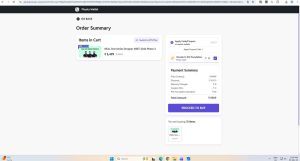
1.BASKET SNEAKING- A ₹10 donation to the PW Foundation was pre-selected and automatically added to the final payable amount at checkout, without the consumer’s explicit consent.
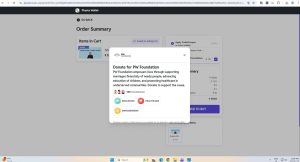
2. CONFIRM SHAMING- Consumers who clicked “Know More” were shown emotionally charged messaging invoking children’s education, healthcare, and marriages of underserved communities which were framed to induce guilt and discourage de-selection of the donation.
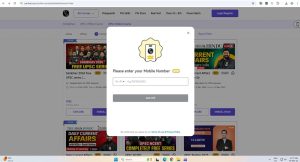
3.FORCED ACTION & INTERFACE INTERFERENCE- Courses advertised as “free” could be accessed only after the consumer disclosed personal information such as a mobile number and email ID. The CCPA’s examination found that the underlying course content was identical across accounts irrespective of whether such data was furnished.
The CCPA concluded that this conduct violated Sections 2(9), 2(28) and 2(47) of the CPA, Rules 4(3) and 4(9) of the E-Commerce Rules, and the Dark Patterns Guidelines. The order underscores that consent obtained through pre-selection or emotionally coercive messaging does not meet the threshold of “explicit and affirmative” consent that the E-Commerce Rules require.
McAfee
The matter before the CCPA arose from allegations on McAfee for implementing “Confirm Shaming”, wherein it does not provide a neutral choice such as “Cancel” or “Skip”. Rather, it’s subscription renewal notification offered only two options—“Renew Now” and “Accept Risk”. A Show Cause Notice dated 4 December 2025 was met with McAfee’s submission that the interface had since been revised to include a neutral “Skip” option. Critically, the CCPA observed that the introduction of a neutral opt-out only after the notice was itself an implicit admission that no such mechanism had existed before and held that post-facto correction does not extinguish liability for the earlier deployment. CCPA also refused McAfee’s defence that a close (“X”) button preserved a genuine opt-out stating that this option was not clearly visible for the users, thus holding it liable for “Forced Action”. McAfee was also held to be liable for Interface Interference because of the disproportionate visual prominence to the renewal option while obscuring the opt-out, in a manner capable of misdirecting consumer action.
On this basis, the CCPA found violations of Section 2(28) (misleading advertisement) and Section 2(47) (unfair trade practice) of the CPA, Rules 4(3) and 4(9) of the E-Commerce Rules, and the Dark Patterns Guidelines, 2023. The Authority specifically rejected the submission that the absence of complaints negated harm, reasoning that dark patterns operate precisely by evading conscious recognition, so that an absence of complaints “cannot be construed as absence of consumer harm.

Broader Framework Around Dark Patterns
Dark Patterns are any practices or deceptive design pattern using user interface or user experience interactions on any platform that is designed to mislead or trick users to do something they originally did not intend or want to do, by subverting or impairing the consumer autonomy, decision making or choice, amounting to misleading advertisement or unfair trade practice or violation of consumer rights. The Department of Consumer Affairs has outlined 13 specific deceptive practices that are explicitly banned through Guidelines for Prevention and Regulation of Dark Patterns, 2023. These include False Urgency, Basket Sneaking, Confirm Shaming, Forced Action, Subscription Trap, Interface Interference, Bait and Switch, Drip pricing, Disguised advertisement, Nagging, Trick Question, Saas billing, and Rogue Malwares.
Until recently, CCPA’s approach to dark pattern violations was largely advisory wherein it issued notices that prompted corrective action rather than punitive consequences. IndiGo, for instance, received a notice dated 19 June 2024 for confirm-shaming language on its add-on opt-outs, and BookMyShow received a notice dated 11 February 2025 for basket-sneaking through a pre-ticked charity donation. In both instances, the companies simply revised their interfaces in response, and no penalty was imposed. The PhysicsWallah and McAfee orders mark a clear departure from this pattern since CCPA has now moved to substantive enforcement wherein adjudicating violations and imposing penalties even where the platform has since amended its interface. Critically, subsequent remediation is no longer treated as curing the default since in McAfee’s case, CCPA held that the post-notice introduction of a neutral opt-out was itself an implicit admission that no such option had existed earlier, and that this correction could not extinguish liability for the prior deployment.