
Becoming Allies: An Interview with Ankita Pandey (Part I)
Ankita Pandey
SLR editors Arya Harishankar and Hiranya Gupta sat down with Ankita Pandey to discuss her new book ‘Becoming Allies: Civil Liberties Activism in India’ (Cambridge University Press 2026). In Part I, she discusses the origins of the book, why she treats allyship as a politics in its own right, and the dilemmas it carries. This includes reflections on state-facing politics, and the danger of paternalism inherent in amplifying others’ struggles.
In Part II, she turns to how activists remember their pasts, why fact-finding works as a “left legalism” that borrows the form of liberal law, and the shifting nature of allyship in a time of digital activism, virality, and growing suspicion of dissent. Our conversation concludes with a reflection on what it means to research a group that resists being the protagonist of its own story. Read Part II here.
Introduction
SLR: In Becoming Allies, you explore a vital but often overlooked dimension of social movements, the role of those who support a cause without being directly affected by its injustices. Drawing on interviews conducted with civil liberties activists and on documents from their private records, your book traces the evolving politics of allyship in India. Anchored in the histories of groups like the People’s Union for Civil Liberties and the People’s Union for Democratic Rights that arose in the context of the Naxalite movement and the Emergency, the book sheds light on the ethics, dilemmas and struggles of standing alongside others in a struggle. How did you come to work on this theme for your PhD, and how did it eventually develop into this book?
Ankita Pandey: When I began, I thought I was going to write about the history of an overlooked social movements in the country. That is when I thought that this movement had been there for long enough, and there were not many commentaries on it, especially nothing that was based ethnographically through interviews with the activists.
So, when I started, I thought I was writing the history of a social movement but over time I realised that the puzzle lay elsewhere and that this category itself was not applicable here. It made me uneasy to use that category. I ended up rethinking what they were a case of. Eventually, I ended up proposing a conceptual vocabulary to understand this politics.
Becoming Allies
SLR: The book opens with how Ambedkar refused to endorse a civil liberties approach since it focused too much on the state instead of society and caste. Does this distinction between civil liberties and democratic rights still stand today? We have seen the idea of constitutional rights evolve and expand, especially with the intervention of the judiciary. Does civil liberties activism necessarily have to be a state facing project or can it take positions on social hierarchy without losing its core definition?
Ankita Pandey: Yes, I think Ambedkar’s critique stands. Ambedkar’s critique essentially is that this is a form of politics that is overly focused on the state at the expense of looking at the injustices that are present in society. The context of the above critique was a 1937 Civil Liberties in India conference that took place in London. The Indian Civil Liberties Union had sent a memorandum to Ambedkar and had solicited his signature. Your question highlights his critique. He wrote back communicating that he will not be able to sign this because he does not stand for a form of politics that is focused on the state at the expense of looking at societal injustices. So, your question was, does that critique stand? Yes, I think the critique stands.
At the same time, the activists I interviewed are aware of this critique. They are deeply aware of the fact that injustices that are often along the lines of caste and gender get overlooked if one is focused on extrajudicial sort of violations. And I think some of these activists would talk about how in the 1980s there was a period of intense landlord and labour conflict in Bihar. It is very difficult to understand that conflict or to even make sense of that conflict without understanding caste, because caste plays such an important role in that conflict. So over time, even working on civil liberties issues, they have become more and more aware of questions of societal injustices. They have raised issues around manual scavenging, they have undertaken fact-finding in the Hathras case. There is some awareness and there is an attempt among the activist community to address this critique. It is not a critique that can get resolved one way or the other. It is something that anybody, any activist doing this politics should remain mindful of. Ambedkar provides a corrective to think about it. When you start practising any politics, it is very difficult to remain state focused or society focused because of the overlaps between state and society that exist in practice. It is very difficult to overlook one dimension and focus on the other.
On your second question about whether civil liberties are primarily state facing— I think they are. There are groups like the American Civil Liberties Union, the National Council of Civil Liberties in the UK, even the ICLU and all of them have focused on state actors abusing their power. They are focused on issues like preventive detention, and custodial torture, and what otherwise are known as human rights issues in the rest of the world. So, the dynamic they have focused on has been a citizen-state dynamic. Even theoretically, civil liberties tradition is about protection of citizens from the abuse of power by the state. But as I said, in practice, society and state cannot be weakly separated. Think of communal violence. There will be an element of civilian violence, but there will always also be an element of administrative incapacity or even overlooking this violence.
More broadly, I want to add that all social movements are state facing, whether they want the law to be repealed, or whether they want a law to be implemented. Think of most social movements in India’s history. Think of the women’s movement asking for rape laws to be amended. Or the farmers’ movement wanting the Farm Laws to be repealed. There is always, not just in civil liberties, but even in democratic rights, or rights in general, an aspect of looking towards the state that is inevitably present. So, it is quite necessarily largely a state-facing project.
SLR: Another critique of civil liberties activism is that the idea of paternalism presents a danger inherent to allyship. For instance, the episode recounted in later parts of the book about Nagbhushan Patnaik, who was sentenced to death, but refused to fight against it since he wanted to prevent any form of interaction with the state. Regardless, civil liberties groups continue to provide him with legal aid and support. If ally activism is ultimately a politics of amplification, how did these organisations determine whether they were amplifying a struggle or speaking on behalf of it? Is paternalism inherent to the ally of activism? This question is in context of the fact that with increased access to media and the law, has the danger increased over the years acting as an added leverage?
Ankita Pandey: Let me start by describing the politics of amplification a little bit, and then I’ll come to the question of paternalism and representation. The politics of amplification is at least in the way that I study it, when a group as a collective, pick up a cause that you are not the direct victim of. And should that be successful, you are materially directly not going to benefit also. You may have other benefits. You might find it is very fulfilling to live one’s politics. There is a great sense of purpose in it. So, I am not saying that this is some altruistic, selfless form of politics. But there is an element that the people who are doing the politics are one step removed from those who have a direct stake. And what they are doing is that they are helping claims travel from one domain to the other.
Say that there is a remote village where opened fire on protesters. From there, an ally group takes it to local news, to national news, to bringing it to the parliament, taking it to the judiciary, or sometimes international human rights organisations. I see the politics of amplification as something that allows claims to travel across different domains, claims that otherwise could have just remained local claims. Now, when I describe it like that, I hope you can see that it is not a neutral activity. Obviously, they do not amplify every group or every form of injustice. They are not some sort of, you know, mediators playing that function of amplifying every game. They select, and when they are selecting, it is on the basis of the worldview they have and the kind of politics that they inhabit or believe in.
Nagbhushan Patnaik is a case like that, and it is an interesting case because we see an instance of allyship here even when the victim is actually not requesting for it. In most cases, they get approached by small groups saying, can we do fact finding? Can this be amplified in Delhi and in the national press? But for anyone who does not know, Nagbhushan Patnaik was one of the founding leaders of the Communist Party of India (Marxist-Leninist) from Odisha, and he got arrested in 1969 in what is called the Parvatipuram conspiracy case. The Sessions Court sentenced him to death in 1970. What Nagbhushan Patnaik did is that he refused to seek any mercy. He refused to request for the constitutional remedies that would be available to somebody who has been sentenced to death. In fact, he asked for early execution.
Now, civil liberties groups, in particular, at that time, there was K. G. Kannabiran, there was Malati Choudhury, there was Jayaprakash Narayan himself, etc. All of them shared this collective idea that what has happened is unfair. This should not be the case. So here, allies had their own sense of what the state owes somebody, and they may not have shared it with the so-called victim, but they shared it internally with themselves. So, allies had a sense of what a constitutional democracy is, what it ought to do, and how it ought to behave. They continued to actually fight for a long time for his bail, organise legal aid, and seek financial help for his family. Ultimately, I think in the 1980s or 81, he was released. He was quite unwell by that time, but he was in fact released and was not executed as the Sessions Court had sentenced.
Now, of course, you are right. Paternalism is a real danger here. It is kind of inherent, right? If I am going to use my privilege, credibility, and my social position to do something, to do some kind of politics, there’s always a chance that while all of that could work, it could have its dangers. It could lead to what you said was paternalism. It could be that instead of the spotlight going to the cause, the spotlight is on the person themselves. But if we consider social science literature, in a lot of the studies of social movements, we do not even think of allies as independent activists. They often get classified, as I have said in the book, along with the movement itself. It is only when we recognise it as an independent form of politics, can we open up the possibility of scrutinising it and point out about its dangers in practice.
Both the larger civil society as well as those whose cause the allies are claiming to amplify keep them accountable. I see my contribution as opening up that domain for scrutiny, so that these issues of paternalism can actually be spoken about.
SLR: The book talks about the Assam movement where one set of groups were in favour of supporting the idea of self-determination and sovereignty, while another set of civil groups were more interested in the rights of refugees. So, there is clearly an idea of competing claims and competing rights. What do these cases reveal about the limits of allyship? Because, as it seems, in such instances, there is no single victim and no single oppressor. What would solidarity look like in such instances? Would you say that a narrower focus by civil liberties groups, say centered on state violence, would make these groups more efficient?
Ankita Pandey: In the book, the Assam movement is one of the issues that the People’s Union for Democratic Rights debates quite intensively. Many of my interviewees reported it to me as a difficult moment because when you have both groups with some legitimate grievances, what position do you take as a civil liberties activist? One of the things that I should say, to set the context of why I have spoken about it in the book, is that when I met the activists, many of them rehearsed with considerable time and intensity the debates they had had. They remembered the debates they had and rehearsed it for me within the fraternal organisations. They looked back and reflected on whether the positions that they had taken back then kept them in good stead or not.
The point I was trying to make in the book, through that example, is that debating on some of these difficult issues is what in fact creates their own identity. You are going to have to choose which causes to support or where to focus one’s resources and attention as a small organisation. It will not be predetermined. It will need to be debated case by case. And collectively, what allyship means to them will only come to the fore through these debates. In a way, those who are directly affected do not need to debate. They find themselves in a position already. But it is only people who are one step removed who have to actually debate and figure out where they want to be. Debating is then a way in which this collective identity actually develops. In this particular case, it actually made allyship more modest. They learned that it is morally not uncomplicated to be an ally. It is difficult business, and they held back because they were unsure about which way to go. So, I would say that difficult cases make allyship more modest— in the absence of certainty about what to do.
That said, subsequent to this episode, allies have been raising the questions on the imposition of extraordinary laws in the Northeast in general, not just Assam. They regularly release statements against the notification of disturbed areas which then allows for a whole range of extraordinary laws to become operational. They have talked about detention and extrajudicial violence by law enforcement agencies. They have spoken about a whole range of things in the Northeast subsequently, but on the migration question, they have found it quite tough to navigate.
SLR: In the book, you complicate this idea that civil liberties are simply a non-party formation. So, the activists that you study, they are wary of having a party badge attached to them because in their mind, it reduces their credibility. But over time, what we see is that many people who are involved in allyship, say civil rights activists, for example, might move in to become, say judges, or they might become, say specific types of lawyers, and they are interacting more closely with the state. Is that the success of ally activism, that is an effort of influencing allyship from within the state or does it signal its dissolution, that the loss of this outsider position makes allyship less credible? And does this even matter as to which institution they are entering, or would you say it is necessary?
Ankita Pandey: Non-party political formations was a term coined by Rajni Kothari, D.L. Sheth and Harsh Sethi in 1984. They thought that there was a crisis in the party system in the country— in that the parties were not able to be a good vehicle between citizens and the government. They thought that because of that failure, a bunch of organisations had emerged in the country, which they collectively referred to as non-party political formations. They believed that these organisations were actually there to fill in the gap that the failure of the party system had created.
When I interviewed activists, I had gone in with this idea that they will be autonomous from party politics. The non-party, or the “non” in the non-party, gives the sense that this is an autonomous from party politics, but I actually found that it was a situation of, what I eventually argue, a contextual negotiation with parties. There is a lot of involvement with parties. For example, during the Emergency, we see opposition parties to the Congress come together with the broader social movement and civil society opposition. The parties as well as social groups have come together. Many of these civil liberties groups also allowed a certain percentage of party members to be in their organisation, so long as it does not cross a certain percentage.
Then some civil liberties members had also been in political parties. I found that some had moved back and forth between political parties. Some had been part of various left parties, which is not the same as the parliamentary election fighting, but rather referred to a liberal sort of imagination of a political party. Occasionally, some members had also worked with parties in the opposition to lobby for the causes that they were amplifying.
This told me that, more than a non-party, they actually are a “third party”— engaging with party politics contextually, strategically, and they are negotiating as and when their politics demands it. All of this will not reflect as a certain percentage.
Party members can be part of civil liberties groups, but party lines cannot be the line of civil liberties groups. So, their focus was on organisational autonomy, much more than party politics or discussing permissibility of any transgression between these two domains. The emphasis was on the question of how we actually maintain our organisational autonomy and different groups found different ways of doing it. Some tried to keep party members away. Some tried to keep party issues away. But that was what their focus was as far as their position was concerned.
On the second part of your question, I cannot think of many who joined the state from the outside. In fact, I know the reverse quite a bit. Many retired judges, for example, could head or become a member of a people’s tribunal or be involved in a fact-finding group. The movement is actually from inside to out if at all, I would say. There are lawyers and there are judges, retired ex-judges, or people who have stopped practicing, who would then come and work with civil liberties groups, and that really helped because lawyers would have a good sense of evidentiary practices. They would have an idea in context of fact-finding, on what you must collect or what kinds of evidence is required to make what can resemble a preliminary charge sheet. They would know what kinds of evidence will be admissible in a court of law.
In that sense, the credibility of the practice became, or rather benefited, I think, from the presence of both ex-retired judges as well as lawyers. But again, I would say that their position and the networks that they had helped in the politics of amplification. You know, it helps take a case from the Sessions Court to the High Court to the Supreme Court when you know people who are like-minded. In the process of amplification, this actually facilitated it.
Ankita Pandey
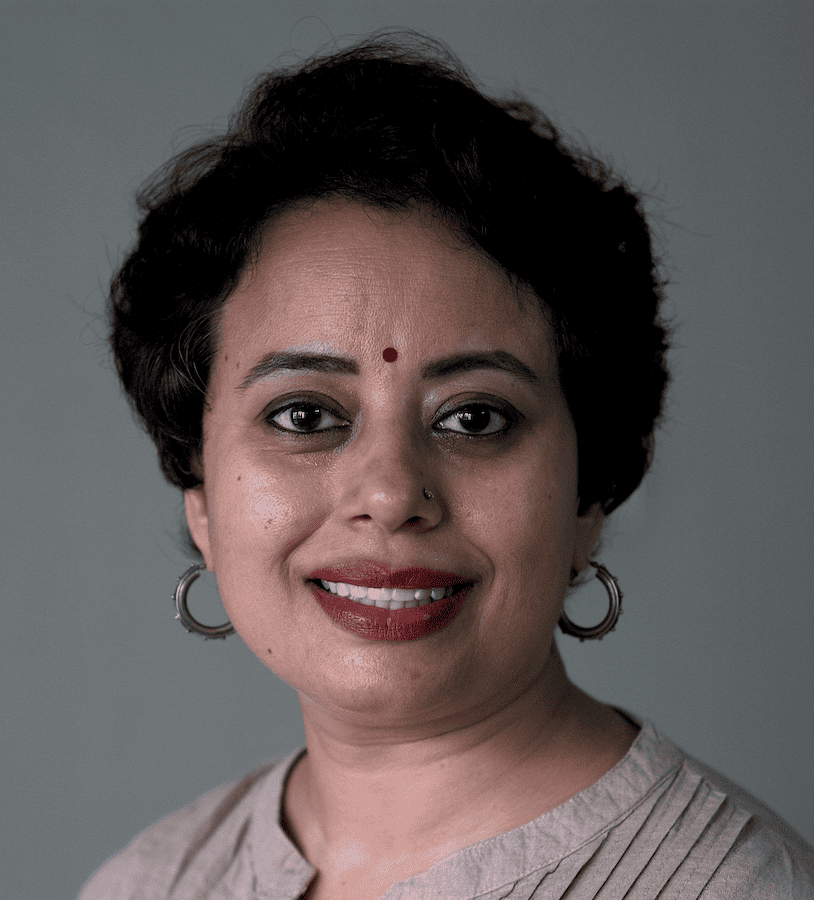
Ankita Pandey is an Associate Professor, Political Science, at O.P. Jindal Global University, and a Research Associate at the Oxford School of Global and Area Studies, University of Oxford.