
Assembling India’s Constitution: An Interview with Rohit De and Ornit Shani (Part I)
Rohit De
,Ornit Shani
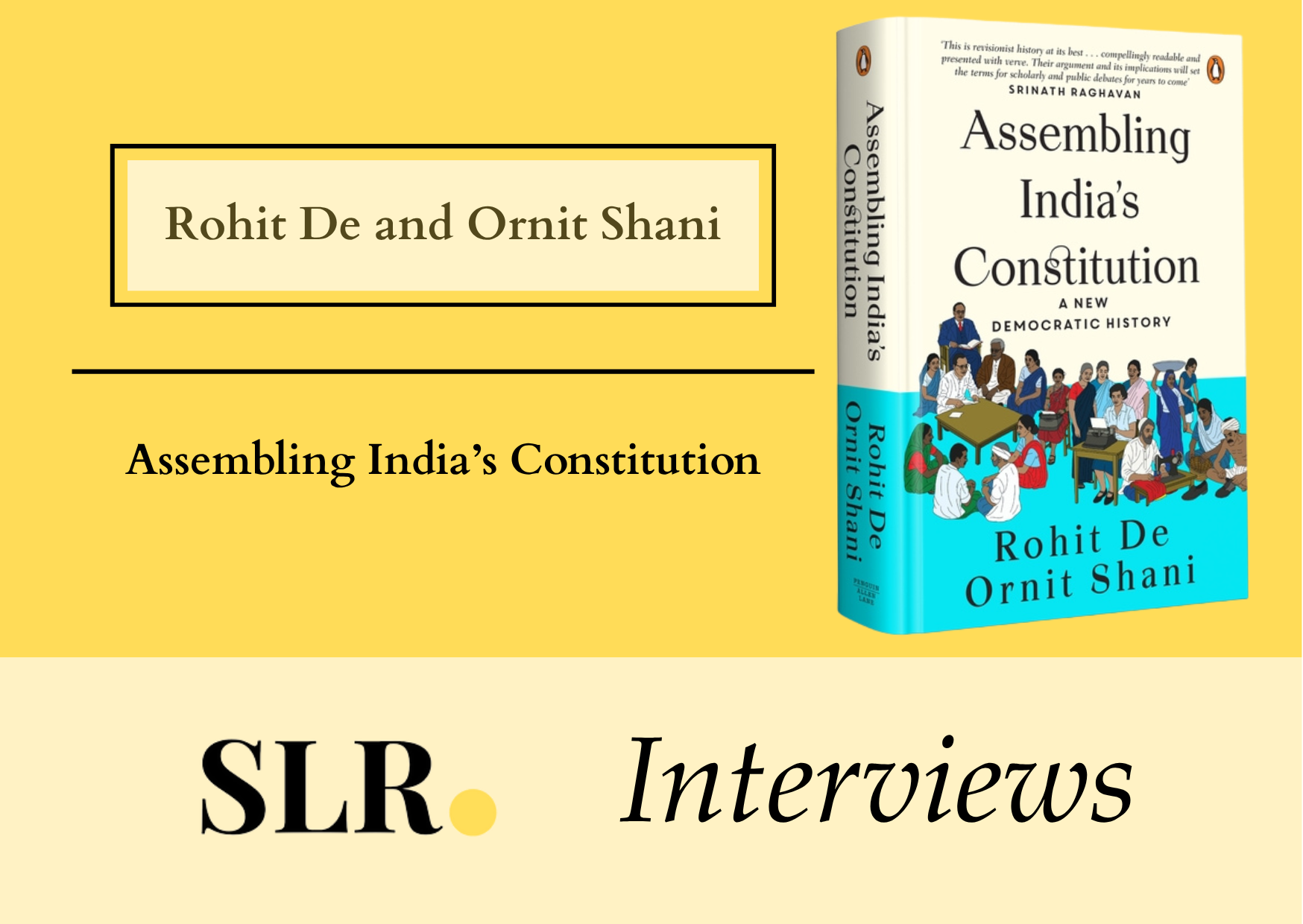
The SLR Editorial Team, including Jyotika Tomar, Dhruti Kedilaya, and Chahat Bhambri sat down with Rohit De and Ornit Shani to discuss their latest book ‘Assembling India’s Constitution’. In Part I, they reflect on questions of archives and method and explore how different publics, including those petitioning the Constituent Assembly and actors in princely states imagining competing constitutional futures, articulated their expectations of the Constitution.
On Archives and Methods
SLR: How did the book germinate from your previous projects on the public engagement with the early constitutional history of the Supreme Court and the history of India’s electoral processes? In navigating the rich archival material you work with, how did you account for the fact that what survives in the constitutional archive may reflect the classificatory logics of the Secretariat rather than the imaginations of the common people (whom you have called constitutional authors) outside the assembly?
Rohit De: From the 1980s onwards, Indian historiography in particular but historiography in general has reckoned with the fact that the archive represents the voice of the dominant. The challenge then was to find ways and methods to read the archive against the grain. There was emphasis on the idea that it is not really possible to “recover” the voices of the “people” but possible to find spaces of resistance and interrogate the silences. In some ways, legal history was abandoned because there was a sense that it was the voice of the state and of dominance. In the early 2000s, there was some acknowledgment that the legal archive was different from the bureaucratic archive, and it was possible to find different kinds of contestations there. Some of the newer work that has been coming out does not take the idea that the legal archive is necessarily the voice of the dominant at face value.
Something Ornit and I had to contend with was that so many voices raising issues of minority rights were made possible because the Assembly established a Committee on Minority Rights, so it is possible that other kinds of concerns got re-framed as minority concerns. So, to understand these voices, it is important to understand the logics of the original archive as well as have a sense of the classificatory logics of the National Archives of India.
Ornit Shani: To start, even the question of what the people were thinking about and how they were engaging with the Constituent Assembly was not really raised before, because scholars were working under the assumption that people did not particularly understand the working of the process or had much interest in it — a plausible assumption, given the high levels of illiteracy, scarcity of resources, the horrors of the Partition at the time. We both started separately to break these assumptions in our previous work —Rohit in A People’s Constitution, showed how immediately after the Constitution comes into effect, the so-called ordinary people were very well versed in the constitutional text and savvy with their use of the language of Fundamental Rights and approached various forums to address violations of their rights. In my work in How India Became Democratic, I showed how the preparation of the draft electoral rolls for the first general elections demonstrated peoples’ deep understanding of the transformative implications of universal adult franchise for them as citizens of a new republic, and their engagement with the constitutional text. In many ways, our previous work had already begun this methodological work.
As Rohit said in reference to the Committee on Minority Rights, or the Sub-Committee on Tribal and Excluded Areas — both established by the Constituent Assembly — it is true that the way the state framed the question impacted the discourse that followed. But interestingly, the archive tells us about the many ways in which people undid colonial categories of minority identities and reframed them on their own terms.
Rohit De: The older logic would focus primarily on the centrality of the organisational logics of the state. But what we find is that people were very well aware of these logics and understood that being heard by the state required not only working with its vocabulary, but also finding creative ways of making their own demands heard.
On a methodological level, what distinguishes history from other social sciences is that, unlike political science, as historians we are not concerned with empirics or having to ask questions of random sampling, or of the bare numbers of how many of these archives survive. We are aware that what survives is an incomplete and fractured archive. This allows us to be more creative in terms of methods and be imaginative in how we piece sources together.
Ornit Shani: One of the joys of this project was in co-authorship, which is not very common for historians to do. This co-production of knowledge allowed us to bring much more creativity to the work of reading the archive, as we both brought very different methods and perspectives to looking at them. When we encounter a document and read it together, Rohit is interested in questions of where it was found (in terms of what collection it was a part of), how it appears stylistically and I am thinking of very different questions.
Our attempt is to move beyond the convention of relying solely on the Constituent Assembly Debates and official narratives of the drafting process. We also discovered that the Constituent Assembly Secretariat itself acknowledges that not all archives of the debates themselves have survived. So we had to work under the assumption that much is missing, and this also allows us to look beyond the “official” archive — look at records of newspapers, radios, pamphlets, artwork, advertisements and so on — and assemble a narrative.
Rohit De: A hope is also that through initiatives like the Centre for Law and Policy Research’s Petitions Archive and work by organisations like ReclaimConstitution, some of these archives become accessible to people in the near future. The National Archives of India, at some point, would regularly make portions of their archives available for public viewing, which unfortunately is not the case anymore.
Ornit Shani: Our book has tried to make some of these sources available in the range of images we have included, but it is true that most of them remain in the footnotes and are not available for public viewing.
A Fever of Constitutional Expectations
SLR: South Asia has a long history of petitioning cultures, as your edited (Dr. De’s) 2019 special issue in Modern Asian Studies shows, which would take the shape of persons or collectives attempting to “speak to” authority to seek redressal for wrongs. How do the many publics who engaged with the constitution drafting process as a way of “writing themselves in” change our vocabulary of petitioning cultures and the public sphere?
You also show, in Chapter 2, that when the people began petitioning to the Constituent Assembly, they self-identified along the lines of caste and gender (as recipients of historical disadvantage), religion (as holders of minority status), and occupation — such as agriculturalists, members of the legislature, bureaucracy and judiciary, etc. — a “universe of minorities” as you call it. Do you think that the perception of the drafting process as a potentially “once-in-a-lifetime” founding moment contributed to this mode of solidification of identities as a precondition to how demands were framed and articulated?
Ornit Shani: It is correct that there is a long history of petitioning cultures in India. In our book, however, we point out a difference. It is a difference in the style, but it really maps out as a difference in the substance of their engagements. People were not coming to make requests from the state. There is a marked shift in the tone, content, the vocabulary, and the way it was directed to not just one body, but to anyone who could have a say in it. They positioned themselves not as subjects that asked for something, but as sovereign citizens. They used phrases like “in our Constitution” and “our state”. The vocabulary is such that they make it their own. This is the shift that is happening, and it also impacts how we frame the question of identity.
Rohit De: If I may present a counter-argument here. One could say that this is nothing unusual, Indians are argumentative; they have always petitioned the state since times immemorial. One of the reasons why I co-edited the 2019 special issue of Modern Asian Studies “Petitioning and Political Cultures in South Asia” with Robert Travers is because we both saw that in the periods we were studying, in his case the period after the conquest of Bengal, and in my case, the 1940s, there seems to be a spurt of petitions from newer groups and in newer languages. In a way, it was not surprising because these periods marked moments where there was a strong sense that the logic of the state was changing. It is important to note that there is no unbroken series of petitioning cultures from early modernity to 1947, but a shared sense that the “state of things as we know it” was going to change. The other connected factor relevant for the period we study is about the rapidly evolving technologies of petitioning and print — such as the telegraph, the nature of post and print changes what the sense of the public is.
On identities, the book is an invitation for more work. There is an older narrative that refers to “old colonial identities of caste and religion” but what we find is that while they are used for caste and religion, they also stand in for lots of different things. There is a sense of malleability that these (identities) will and can change. For example, the Draft Constitution had a list of Scheduled Tribes at the end of it in the text. Till 1948-49, it was agreed that the Constitution would include this list of the groups who would be entitled to affirmative action. It became clear that this list had to be revised, and the Scheduled Caste members in the Assembly were very clear that this could not be done without conversations with the groups themselves. There was a recognition that these representational categories were malleable with a possibility of change.
Ornit Shani: Not to reify it, but the state thinks through categories and these categories often limit the scope of the demands that can be made. The interesting thing we see in the period we study is that there is a recognition of a window to create or demand a new kind of categorisation. This is what we see happen in tribal areas, there is the culture of petitioning. But it turns into something bigger as a cumulative force — a constitutional capture, with the possibility of transformation.
SLR: In your chapter on princely states, you show us that many of them were experimenting with constitutional forms that moved side-by-side (if not faster), than the Constituent Assembly itself. When these parallel constitutional design projects are taken into account, how does it help us rethink the narrative that positions the Constituent Assembly as the sole author of Indian constitutional design? Can you speak to how the question of shared sovereignty and federalism was negotiated?
Rohit De: The conventional story is that the princely states were bygone feudal relics which were destined to disappear. The British offered them the possibility of independence and Sardar Patel’s and VP Menon’s negotiation with the rulers themselves is what led to their integration into the new republic. So their place in the drafting of the constitution is either not known, or at best, seen as a side show. To some extent we know of the Kashmir example, which really is a post-1950 process.
We were struck then, by the various experiments that multiple princely states did with constitution design. Some of them are very standard — the king was the political authority, aided by his advisors. The others, including Saurashtra, the Deccan states, and Mysore — were engaged in more creative experiments. It is important to note that the Constituent Assembly had no authority on princely states. The Draft Constitution was supposed to include a clause which would be followed by a Schedule noting all Constitutions of the princely states, but that disappeared soon after.
Ornit Shani: Imagine a map, a cartographic representation of all constitution-making projects at the time. You would then see that the Constituent Assembly in Delhi was merely one among many hundred dots on that map. There will be hundreds of dots across the princely states and tribal areas. In fact, these projects were so important that they became ways for the princely states to assert their sovereignty through the constitutional frameworks they drafted, even as they were aware of their joining of the new republic. The imagined framework was a federation, or a confederation where their state identities would be retained even as they came together with other entities and formed the new republic. There is a memorable photograph from Saurashtra, where several women have gathered to vote for the Constituent Assembly which would draft their constitution. So in many ways, it is a challenge to the idea of a singular sovereign entity or constitution drafting project.
We show that rather than the mainstream understanding of the formation of the new republic — by negotiations led by individual leaders, or brute force such as in the case of Hyderabad — these multiple constitutional experiments created what we call “competing constitutionalisms” in the book. They were “competing” because even as sovereignties were contested, there were very similar notions of rights and claims. For example, the state of Rewa accepted the constitution but then became part of a different union of states. It was a long process and as Rohit said, at the very last moment, the idea of including the Schedule of all princely state constitutions was dropped and instead, several provisions for asymmetric federalism were included in the constitutional text.
Rohit De: The conventional understanding hinges on the idea that sometimes exceptionalises Jammu and Kashmir as the sole example of an asymmetric federal framework, but the truth is that such arrangements were actually struck for most states, which of course disappeared after 1971. If we read Article 371 closely, many of its sub-clauses and provisions are modelled on provisions and ideas brought forth by the constitutions of the princely states. For example, some princely states were allowed to retain their own armies, others had special offices for Rajpramukhs instead of governors, and so on. Before the 1956 state reorganisation, there was a category of states called “Part B” states, essentially unions of states, such as Rajasthan. Some states have since disappeared, such as Matsa union, or Vindhya Pradesh. It is assumed that linguistic reorganisation was the primary driving factor of state formation and reorganisation, but there was a different imagination at work prior to 1956.
Looking elsewhere in the world, Malaysia wrote a constitution for a framework which had both a federation of monarchies and British-governed territories. So now, half their territories are constitutional monarchies and half have elected representatives. In the Gulf, there were a variety of post-war constitutional experiments which worked with federations of monarchies and non-monarchical territories. The point being, the arrangement arrived at in India was not inevitable and a product of these various historical contingencies, which go beyond the conventional understanding of “either negotiation or brute force” as the methods for the coming together of the republic. This often led to moments of crisis, for example in Manipur, the constitutional process was seen as a roadblock for integration and required political mobilisations to move forward, while in most other cases, the imaginations of the princely state or tribal constitutions were attempted to be incorporated within the constitutional text.
Ornit Shani: In the book, we make an analytical and methodological move of foregrounding the process of the making of the constitution over the text itself — done through the prism of the “people.” I think this makes the question of “authorship” less relevant and makes the various processes of constitution framing, articulation of demands, and so on more relevant.
Rohit De: The process by which princely states gradually accepted the sovereignty of the nation state through the Constitution of India required them to have a degree of protection, which was made possible through these long negotiations.
Ornit Shani: Some of them agreed to join the nation state at the very outset, but emphasised their deep engagement in the promises of the new Constitution as a guarantee of their sovereignty and the importance of political self-determination.
Rohit De: Many of these regions were not constitutional monarchies and their approach to the constitution framing avenues was driven by the understanding that it was likely for a monarchical framework to be ousted by the people or toppled by the Indian state in due time.
Ornit Shani: Also, it is not merely a story of the various states, but equally true that regional leaders were strongly driven by people’s movements towards popular government and shared sovereignty. It also helps us complicate the mainstream notions for the reasons of the Indian asymmetric model of federalism coupled with a largely centralised constitutional and political design — those being the Constituent Assembly’s anxiety anticipating possible disintegration in light of the violence of the Partition and in the interest of economic and political development with the state at the centre. In fact, the Constitution as adopted in November 1949 allowed states to retain armies which were separate from the Indian Army.
This is the first part of a two-part Interview series. The second part of this interview is available here.
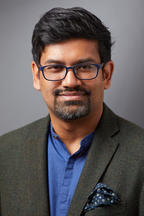
Rohit De
Rohit De is an Associate Professor at the Department of History at Yale University. He is a historian of modern South Asia with a focus on the legal history of the Indian subcontinent. Notably, he authored A People's Constitution: Law and Everyday Life in the Indian Republic.
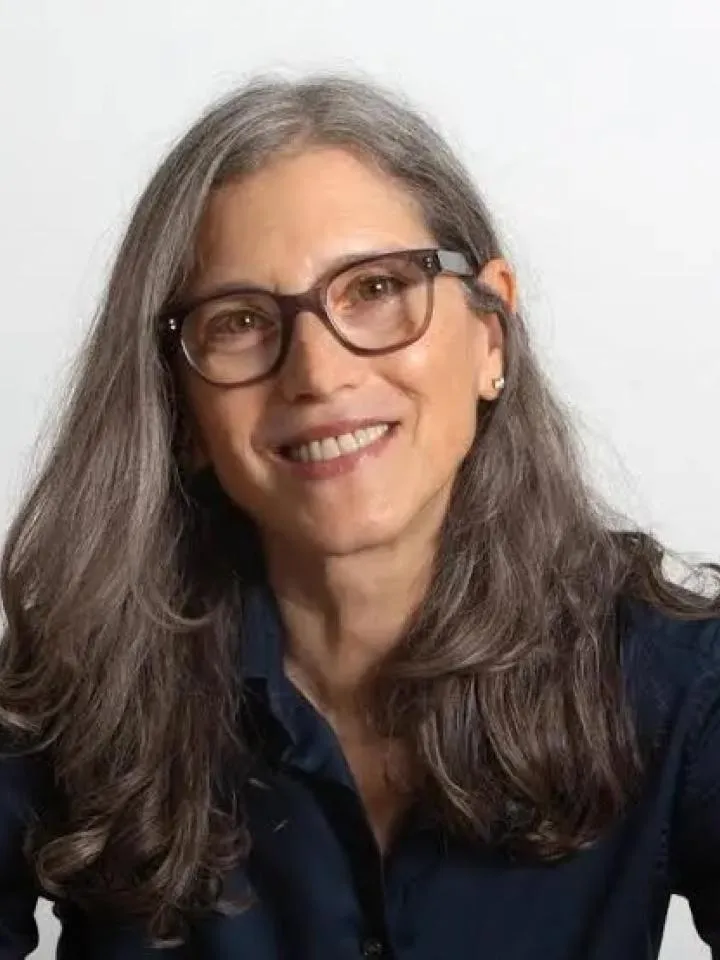
Ornit Shani
Ornit Shani teaches Modern Indian History at the Department of Asian Studies, University of Haifa, where she heads the India Programme. She is the author of How India Became Democratic: Citizenship and the Making of the Universal Franchise.